NOT MEDICAL ADVICE
The information provided is for general informational purposes only and should not be considered a substitute for professional medical advice, diagnosis, or treatment.
SOCS2 (Suppressor of Cytokine Signaling 2) is one of the most important regulators of growth and sensitivity of intracellular receptors and signal transmission GH/IGF.
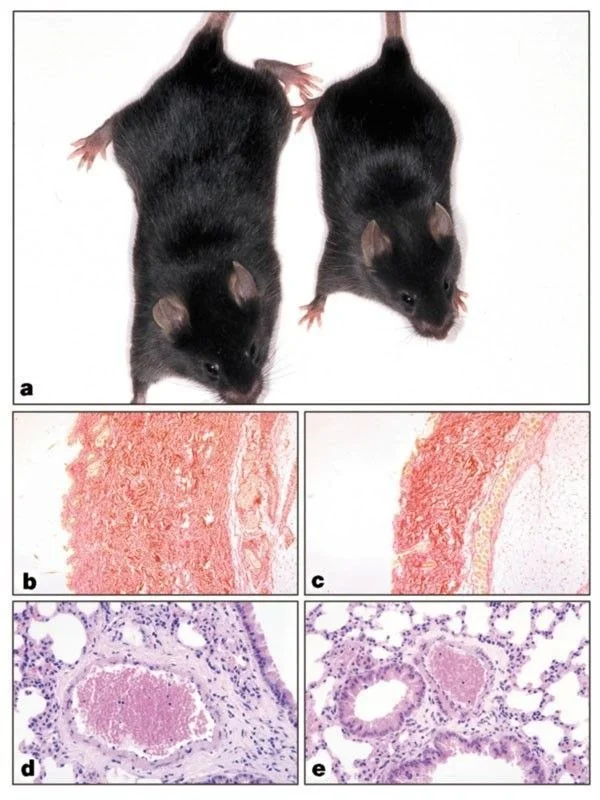
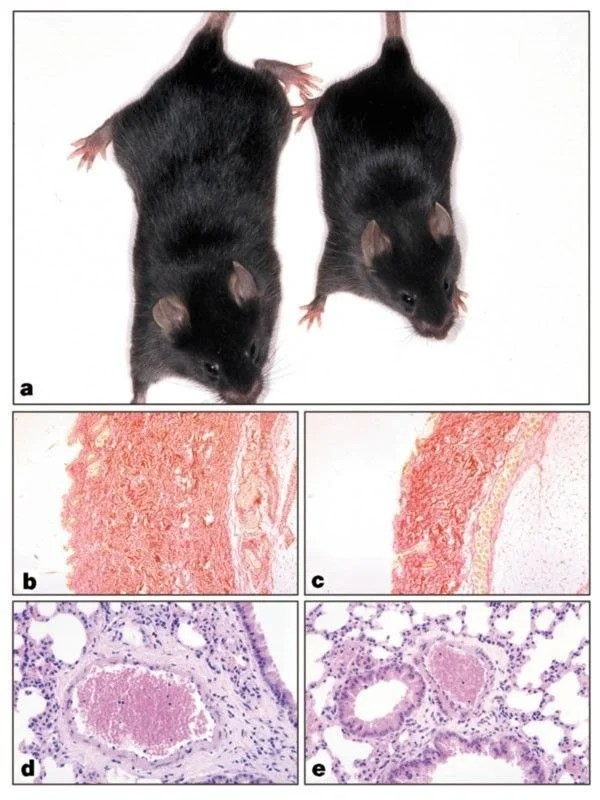
SOCS2 is a critical negative regulator of growth hormone (GH); animals usually show gigantism with increased body mass and length in the absence of SOCS2 expression.
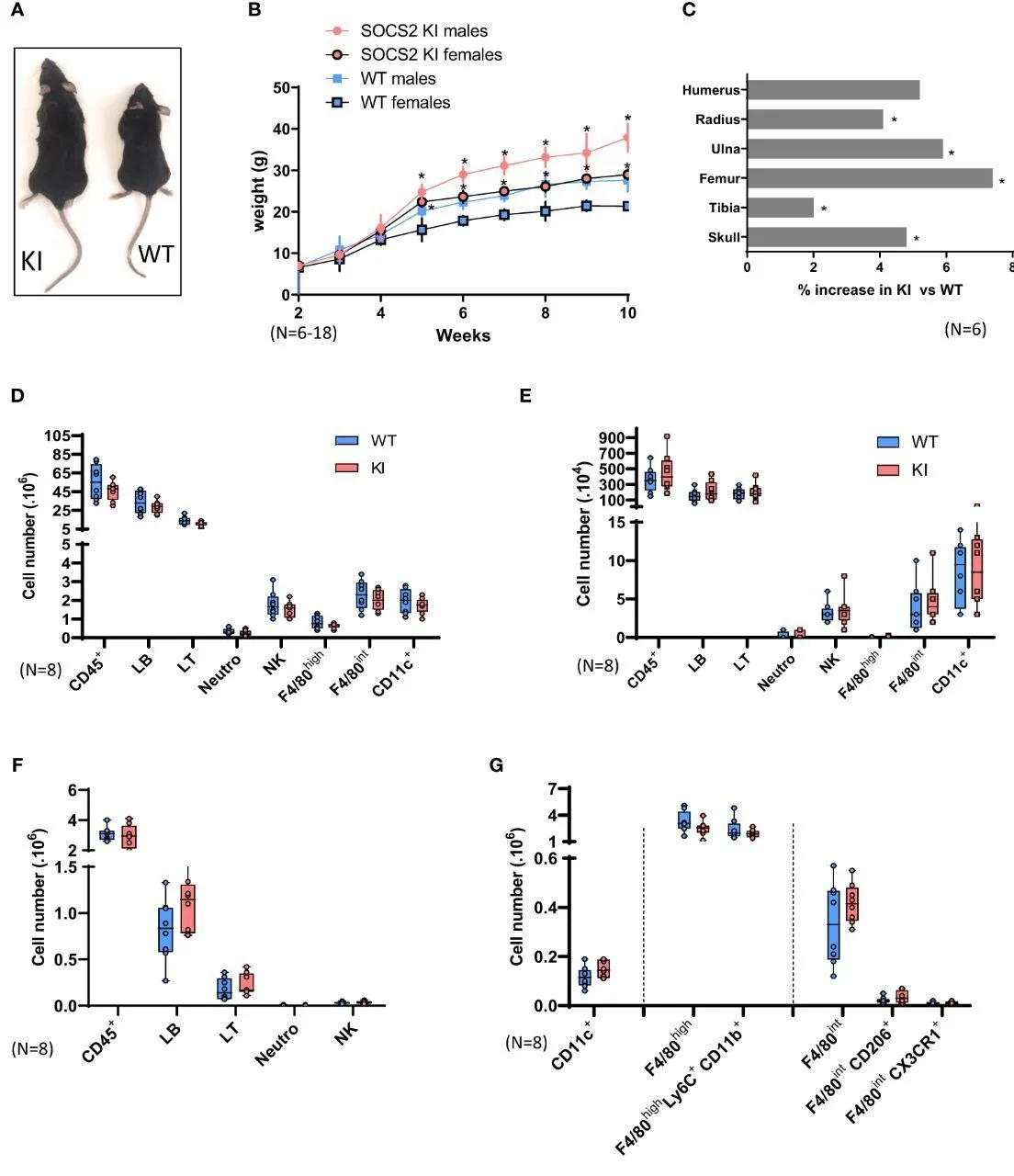 The cytokine signaling suppressor (SOCS) 2 is a critically important negative regulator of growth hormone (GH) and prolactin signaling. Mice with SOCS2 deficiency show gigantism with increased body mass and length, and an enhanced response to GH treatment.
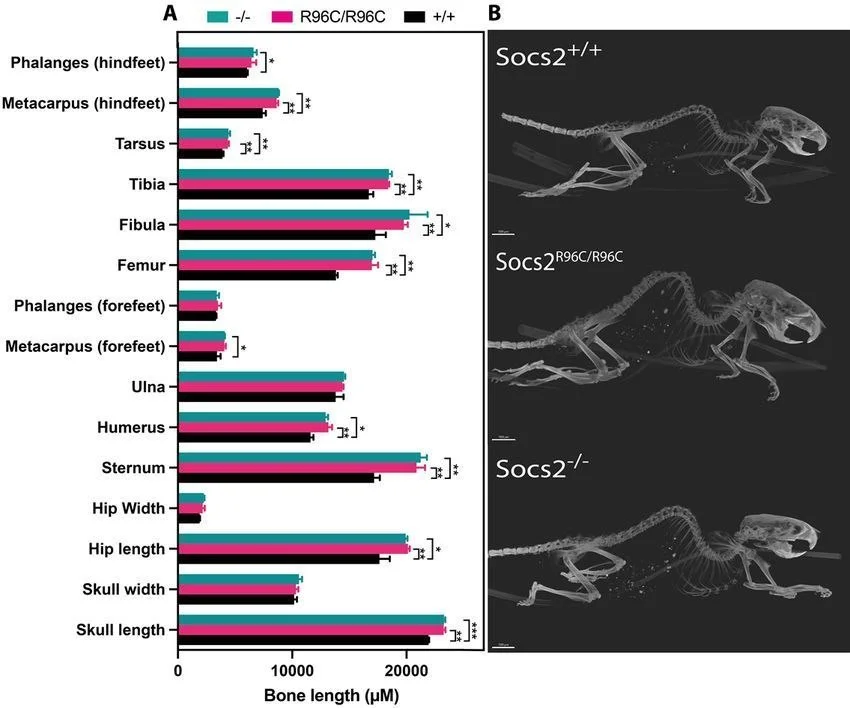
Children with GH deficiency and Turner syndrome, who have various polymorphisms (variations) of the SOCS2 gene, responded differently to recombinant GH treatment (different growth rates and final growth in different groups).
Mice with SOCS2 deficiency show an excessive growth phenotype due to GH/IGF-1 hyperregulation. Six-week-old SOCS2-/- mice had increased growth rates with expanded growth plates and accelerated chondrocyte proliferation compared to WT (Wild Type) mice. However, senescence and fusion of growth zones in SOCS2-/- mice were also greatly accelerated due to the exhaustion of the proliferative potential of chondrocytes due to local GH and IGF-1 hyperregulation.
Due to the excessive GH/IGF signal in chondrocytes, the exhaustion of their proliferative potential and the fusion of growth zones were accelerated.
SOCS1-3
The effect of the interaction between FGFR3 and SOCS1 on receptor activity was investigated in a line of chondrocyte cells overexpressing SOCS1. In these cells, STAT1 phosphorylation was suppressed, MAPK phosphorylation was increased and prolonged, and FGFR3 regulation was reduced.
In other studies, the deletion of SOCS3 in mice negatively affected their growth, reduced the final length of bones and the width of the proliferative zone (PZ) due to the excessive activation of FGFR3. At the same time, SOCS2 causes the degradation of SOCS 1/3, so its inhibition can also lead to a decrease in the regulation of FGFR3.
Thats it for today. Tommorow i will talk about SOCS2 inhibitors.

 3
|
3
|
 0
|
0
|