 11
|
11
|
 20
|
20
|
If you're dumb you probably think you're safe when you use incognito mode and turned off your location sharing permissions. ez opsec? well tbh You're broadcasting most of you pathetic life through your metadata, browser fingerprints, payment trails, and a thousand other small things you don't even know exist. Opsec isn't something you practice because you're committing cyber-crime and doxxing pedos. It's the understanding that everything you do on the internet and in real life leaves a trace, and those traces can and will connect into a pattern that can be identified and labeled with your full legal name dob etc. more than just your face. The people who get caught aren't usually making a "big mistake" rather they make small mistakes throughout time. They get lazy on the small things, thinking they're safe, and that's how they lose their privacy and freedom.
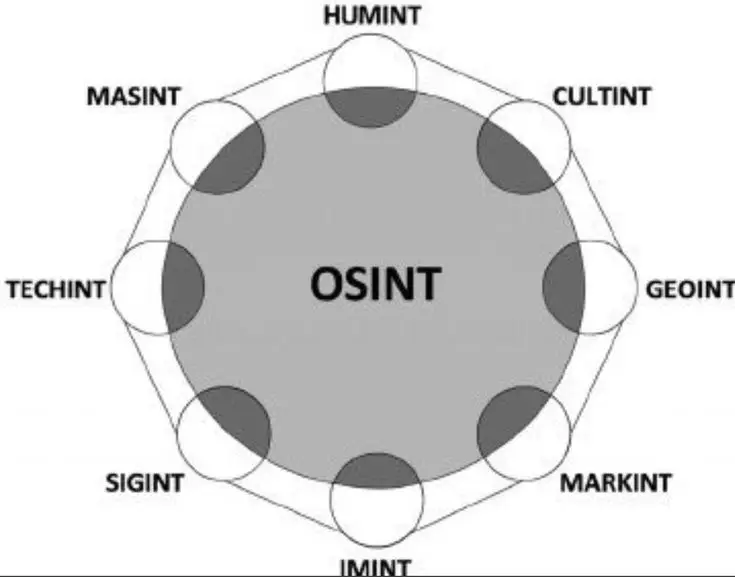
OSINT "Open Source Intelligence" is the process in which someone analysis publicly available information or data to create a profile on you. when someone writes down your life story from shit you leave public. An email you used for a forum that got leaked, using the same user on social medias, even time you entered your phone number on discord for verification. Each piece you leave behind is worthless alone, though when combined they create a chain that leads directly to your real name, your address, your family, your job. Good Opsec breaks that chain at every link. Unique emails per service. Phone numbers that aren't yours. Socials that don't connect. If they can't find the starting point, they can't follow the trail. You don't need to be invisible. You just need to be expensive to find.
Windows is a surveillance device that happens to run games. Every keystroke, every file, every connection is logged, indexed, and potentially extracted. If you're serious, you move to Linux. Not Kali, not Parrot, something actually usable. Qubes OS is the gold standard for isolation, but it's overkill for most. Tails is amnesic and leaves no trace, but it's temporary. If you want daily use with actual security, Whonix runs everything through Tor by default, or Debian with proper hardening gives you a stable base without the telemetry. Pick one, Learn it, Stop making excuses about playing roblox or using adobe Photoshop. Your "convenience" is the gap that separates you from jail and living in your small shitty apartment.
Your IP is your home address on the internet. Every site you visit logs it. Every service you use records it. Every post you make can be traced back to your ISP, your city, potentially your neighborhood. A single VPN hop isn't enough if you're actually worried about being traced. You want a proxy chain: VPN into Tor, or VPN into a VPS that you control, then out. Mullvad takes cash and doesn't ask for email. PIA has proven no-logs in court. Both are fine for the first hop, but the key is layering. If one connection gets burned, the next layer still protects you. Never connect naked. Never trust one service to protect you alone. Never use the same exit point twice if you're actually trying to hide the activity you commence in.
Your connection is masked but your browser is leaking information. Screen resolution, installed fonts, time zones, languages, WebGL signature. All of it creates a specific fingerprint that tracks you across sites regardless of your IP. Firefox with Arkenfox is the bare minimum, LibreWolf comes after. Add uBlock Origin in medium mode, CanvasBlocker, ClearURLs, and Decentraleyes. Disable WebRTC to prevent IP leaks. Or skip the configuration entirely and use Tor Browser for everything, accepting that some sites will not function (hopefully not darktriad.cc). Your browser is your face. Stop showing it off to everyone while you commit "cyber-crimes".
Every photo you take, every document you edit, every file you share carries invisible data known as "metadata". GPS coordinates hidden in your pictures. Creation timestamps in your PDFs. Camera serial numbers in your EXIF. You upload a screenshot to a forum and you've just leaked your timezone, your software version, potentially your monitor resolution. ExifTool strips images clean, MAT2 can clean your documents. ExifCleaner is literally drag-and-drop simple. Do this before every image upload. Every time, no exceptions. One lazy screenshot with your taskbar visible and they've got your timezone, your open programs, your real identity from some forgotten account logged in the background in a edge tab.
Your bank statements are a trail you don't control. Every purchase links to your real name, your address, your spending patterns, your location history. If you're serious about separating your identities, you need to pay in ways that can't be traced back to you. Cash is the obvious option for physical goods. Prepaid cards bought with cash can be used online. Cryptocurrency through non-KYC exchanges or ATMs, then tumbled or swapped through Monero before use. Mullvad literally mails you an envelope to stuff cash into, with no email, no name, no trail. If a service doesn't take anonymous payment, you don't use that that service. Your spending habits point you out faster than your posts ever will.
Your devices are stamped with serial numbers at the factory they are made in. MAC address, IMEI, Processor ID, even hardware fingerprints burned into silicon that survive re-installation, stay across different OS, and get logged by every network you connect to. Your laptop's WiFi chip broadcasts the same MAC to every coffee shop, every airport, every router you connect to. Your phone's IMEI links you to your real identity the moment you put a SIM in the device. Change MAC addresses with macchanger or ifconfig. Don't use your daily driver for sensitive "work". Buy used hardware with cash. Never register your devices. Treat every component as a tracking beacon because that's essentially what they are.
You think you're anonymous because you changed your username for the 20th time this week. You're not, you type "gonna" instead of "going to." You capitalize mid-sentence in a weird way. You use "retard" and "dogshit" as adjectives. You post between 2am and 4am. You misspell the same words consistently. This is stylometry(the statistical analysis of literary style to determine authorship). OSINT tools fingerprint writing style better than they can facial recognition. Your vocabulary, your sentence length, your punctuation habits, they're all signatures, used to track who you are. Change them consciously or you're the same person wearing different hats. Use different languages, different formality levels, different slurs, if your secure persona writes exactly like your real one, you've been caught before you even try to hide.
You can have the perfect "OPSEC" and still get burned by people you know. Networks reveal more than just individuals, your secure account that only messages three people. Your real account also happens to message those same three people. Congratulations, you're retarded and linked your hidden account and main account. Timing patterns matter too, if you log off one account, the other logs on five minutes later, every day, for months, the correlation is now your identification. You need compartmentalization that can extend into relationships. Different circles, different platforms, different timing. Never let your secure identity share contacts with your real one. The weakest link isn't necessarily you, It's the person you trust who doesn't have the same practices that you do.
You can have perfect digital hygiene and still get caught by 10 pixels on a street camera. That prepaid card you bought with cash? The store camera saw your full face, your gait, your clothing. Not to mention your phone's Bluetooth probes for devices constantly, broadcasting your presence to anyone scanning for it. Your WiFi searches for networks you've joined before, announcing your home router's name to every access point in range. DNS requests can leak outside your VPN tunnel if not forced through properly. Your laptop screen is visible to security cameras that you don't even notice. Your keyboard and typing is visible through window reflections. Real physical world mistakes can create digital world evidence. Leave your important devices at home, pay someone else to buy your hardware for you, don't look at those cameras. Treat the physical world like it's also logging everything, because it is, you just don't know it.
simple, you don't practice OPSEC because you're doing "something wrong". You practice it because the world is full of people who want to watch you, catalog, and use your data against you. Doxxing leads to swatting, swatting leads to death. A leaked email becomes online harassment. A phone number becomes cyber stalking. Your location becomes physical assault. Every piece you leave exposed to people, is another weapon someone else can pick up and use against you. Good OPSEC isn't "paranoia". It's understanding that your information is permanent, connections are invisible until they're not, and the person who wants to hurt you has more patience than you have awareness. You won't know you've failed until it's too late, so fix it now, while you still can.